15 Modern Garden Designs to Revamp Your Outdoor Space Today
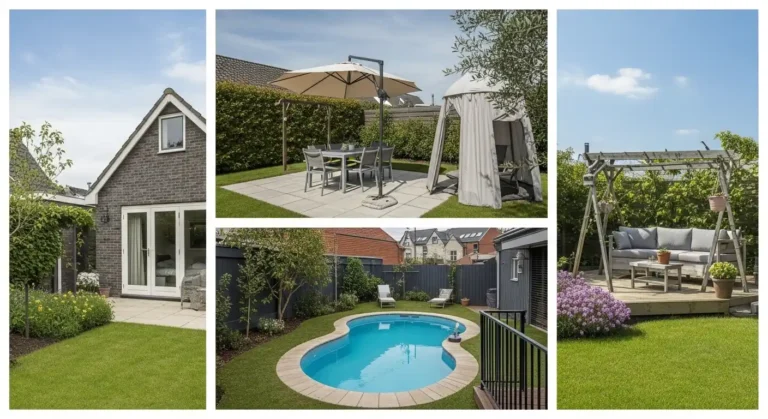
In today’s fast-paced world, finding a personal sanctuary right at home has become more important than ever. A modern garden is more than just a collection of plants; it is a reflection of your lifestyle and aesthetic vision. Whether you have a compact patio or an expansive backyard, modern landscaping can turn any area into a luxurious and peaceful retreat.
However, designing the perfect garden requires more than just picking the right flowers. It involves finding the right balance between minimalism, smart irrigation, and durable materials that withstand the elements. In this guide, we will explore 15 exceptional modern garden designs that are not only visually stunning but also highly functional and easy to maintain.
15 Modern Garden Designs That Will Elevate Your Home
By reading this article to the end, you will gain practical insights and smart planning tips inspired by small garden design ideas that can genuinely enhance your outdoor space. I have carefully curated this list to cover everything from low-maintenance greenery to thoughtful lighting setups. If you want to give your home a more refined look while keeping long-term maintenance manageable, this guide will help you plan it the right way.
1. Rustic Minimalism With Mediterranean Warmth
Rustic minimalism blends raw simplicity with inviting warmth. This design style pairs aged textures with clean, modern layouts. It creates a garden atmosphere that feels both historic and fresh.
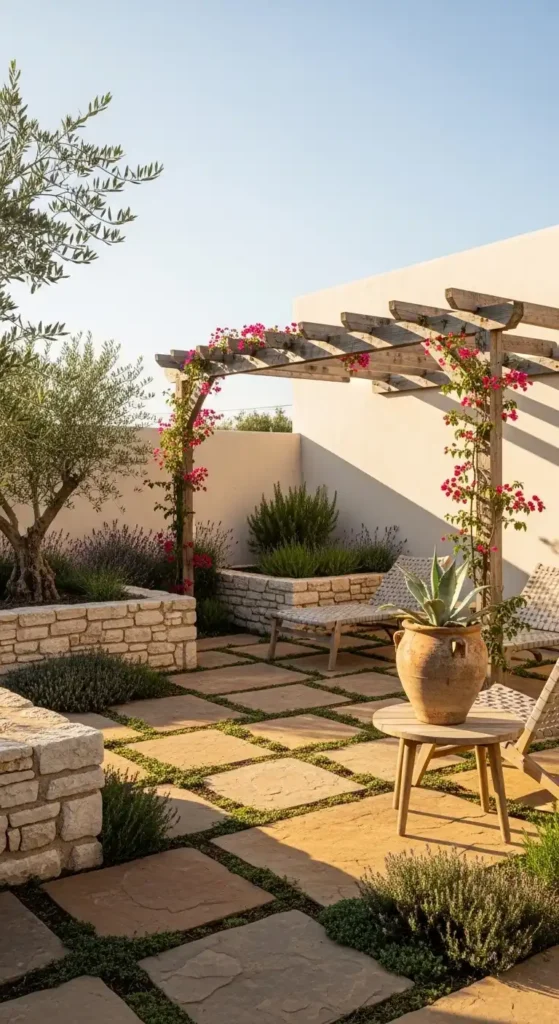
Terra cotta tones and weathered stones define this unique aesthetic. Incorporating olive trees or lavender adds an authentic Mediterranean touch. This approach ensures a high-end look with very low maintenance.
2. Curved Pathway Leading to a Private Dining Deck
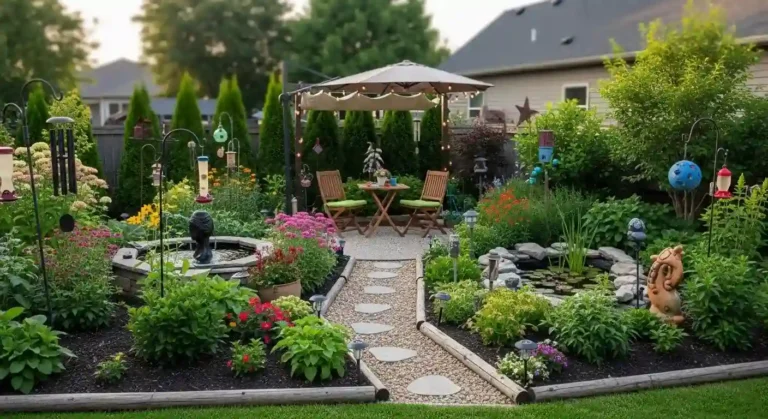
Curved pathways introduce a sense of mystery and organic flow, and I often use this approach in my backyard garden design plans. Unlike rigid straight lines, curves encourage visitors to explore the space and move naturally through it. This gentle journey leads smoothly toward a secluded dining area that feels private and thoughtfully designed.
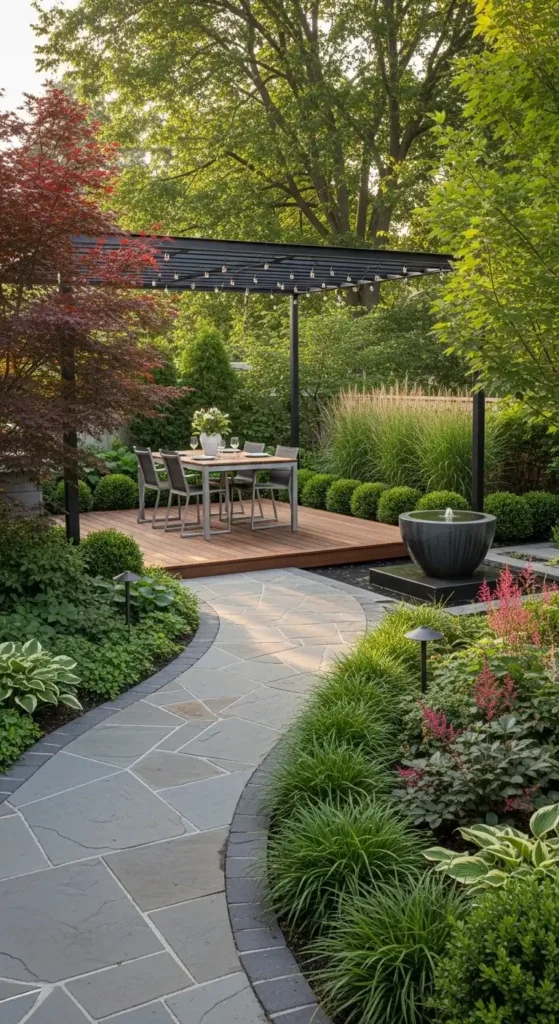
Tucking the dining deck away ensures a sense of intimate privacy. It transforms an ordinary backyard into a functional outdoor destination. This layout optimizes the spatial flow for a better user experience.
3. Incorporate Minimalist Water Features
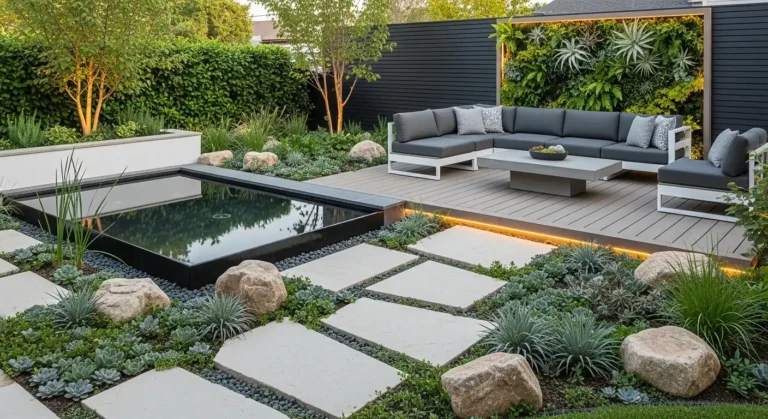
Minimalist water features provide a calming auditory backdrop for gardens. Their simple designs ensure they complement rather than clutter the theme. Sleek fountains or reflective pools are perfect for modern spaces.
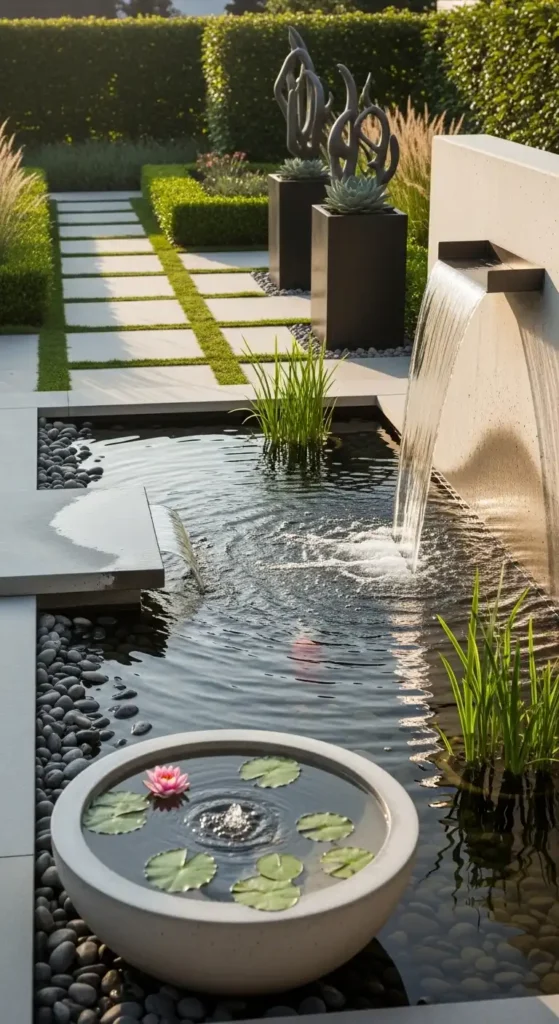
These features naturally cool the surrounding air during warmer months. Simple mechanical setups keep maintenance tasks quick and effortless. A well-placed water element instantly elevates the property’s luxury feel.
4. Mix Natural Materials with Industrial Touches
Blending natural wood with industrial metal creates a sophisticated contrast. This “Organic Modern” trend balances warmth with structural durability. It is a favorite for high-traffic, stylish outdoor living areas.
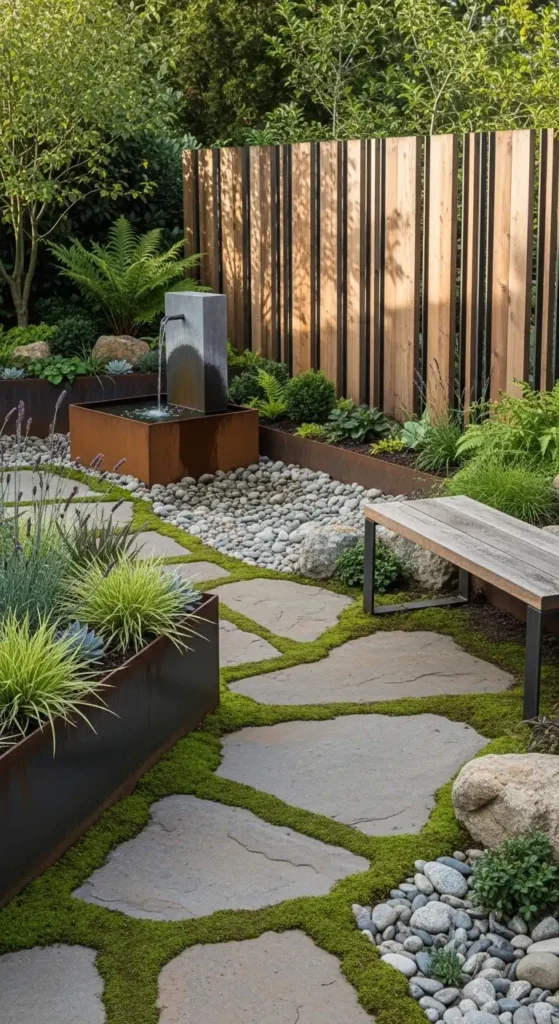
Industrial elements like concrete provide long-lasting structural integrity. Natural stone or timber adds necessary texture and visual softness. Together, they create a balanced and sustainable landscape design.
5. Choose Architectural Plants
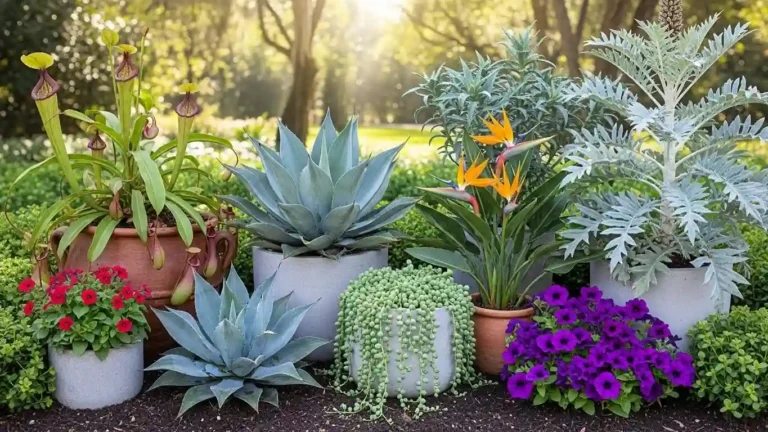
Architectural plants are selected for their unique shapes and bold forms. Species like Agaves or ornamental grasses serve as living sculptures. They create strong focal points that draw the eye immediately.
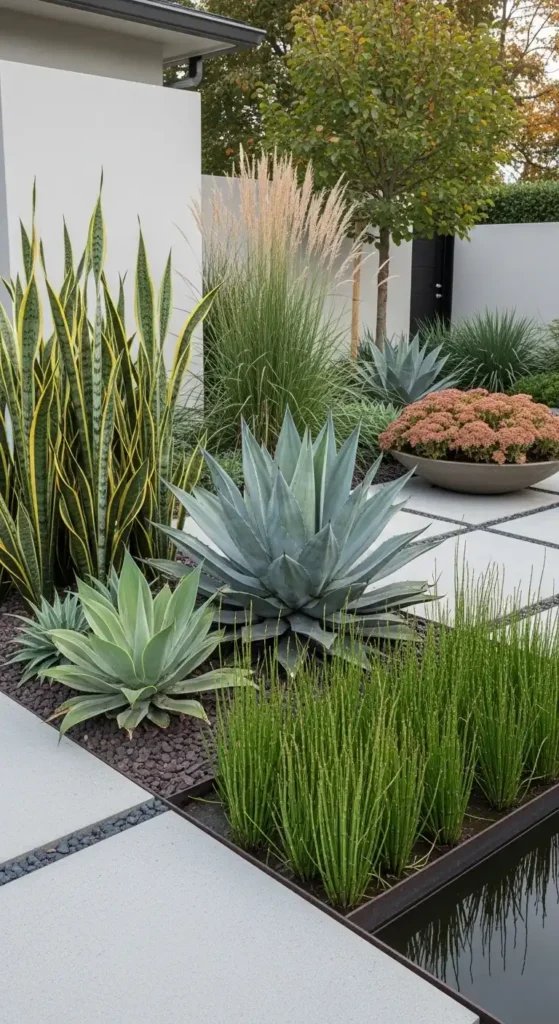
These plants require minimal pruning to maintain their striking appearance. Their defined silhouettes highlight the clean lines of modern architecture. They offer a high visual impact with very little physical effort.
6. Layer Lighting for Ambiance and Drama
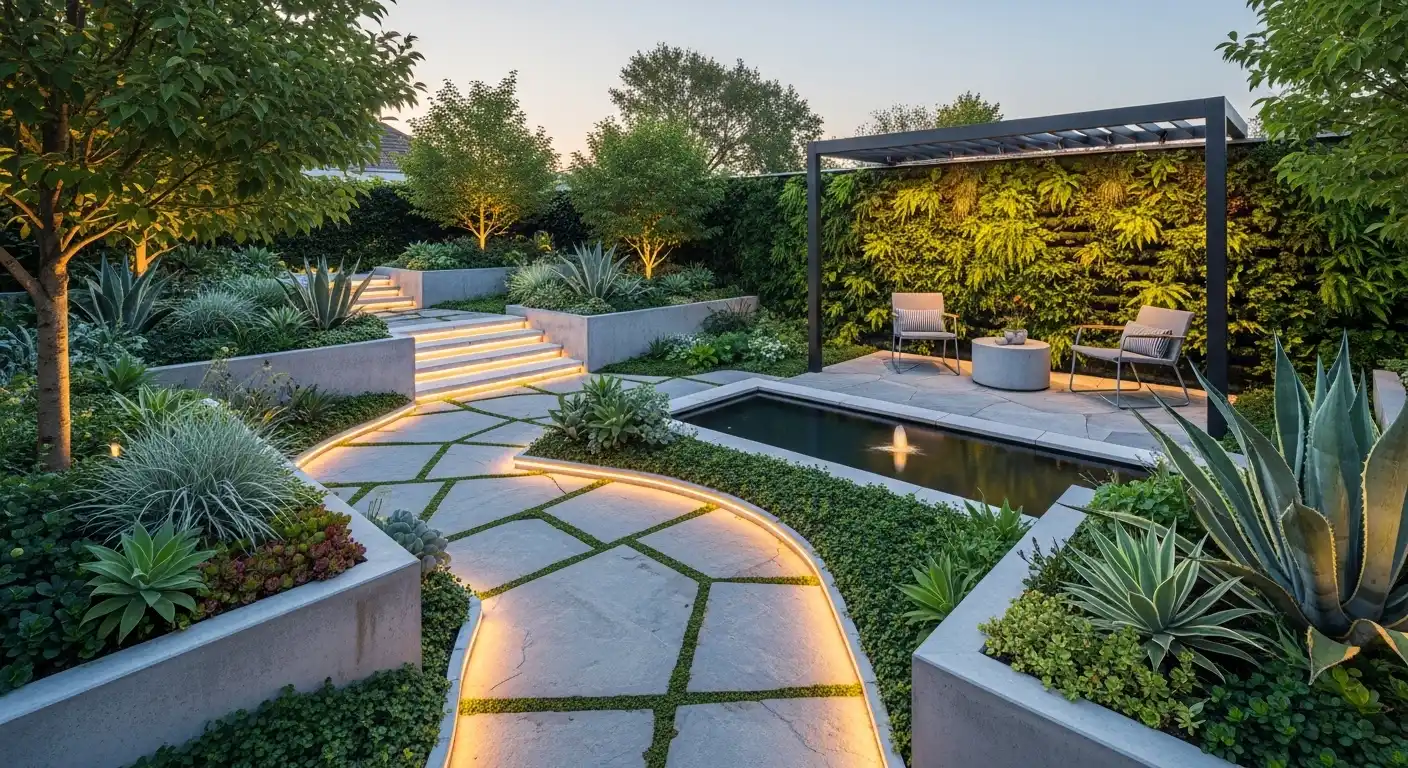
Layered lighting transforms a garden into a dramatic evening retreat. Combining uplights, path markers, and mood lamps adds incredible depth. This strategy highlights key features that would otherwise disappear at night.
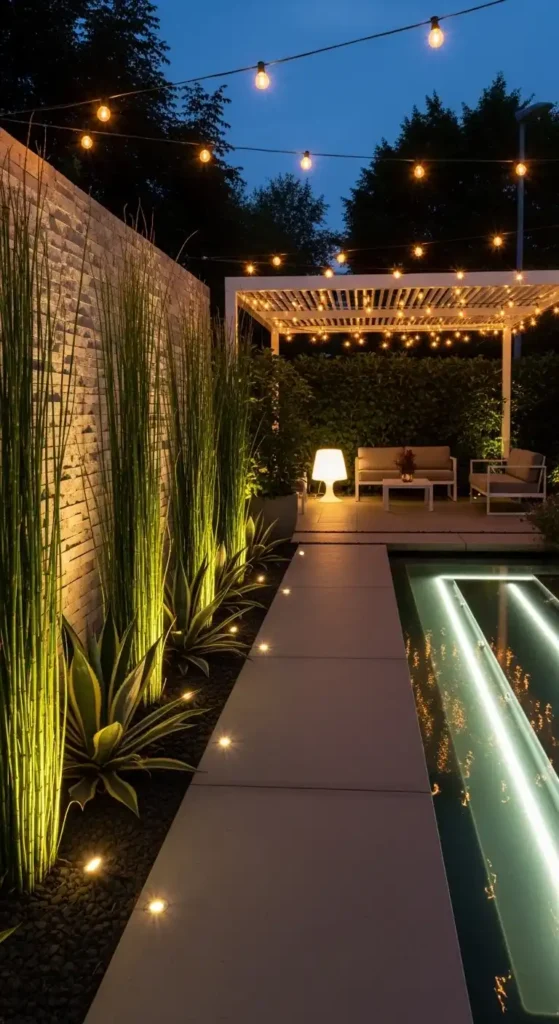
Strategic shadows create a sense of professional high-end drama. Well-lit pathways also improve safety and overall site accessibility. Great lighting significantly increases the functional hours of your space.
7. Create Outdoor Living Rooms
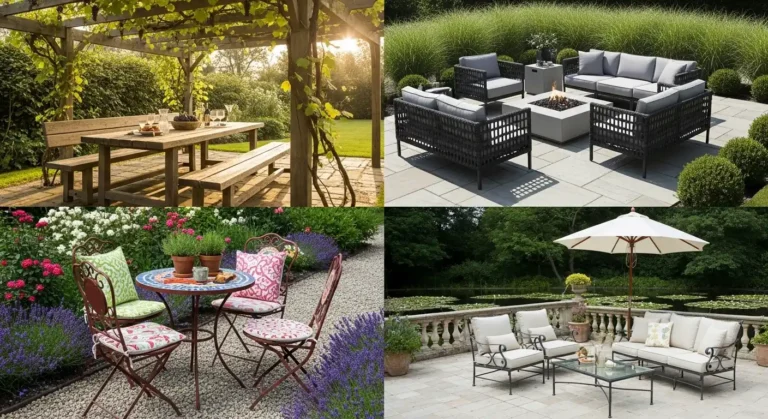
Outdoor living rooms extend the comfort of your home outside. Weatherproof furniture and cozy layouts make these spaces highly functional. They serve as the perfect hub for social gatherings and relaxation.
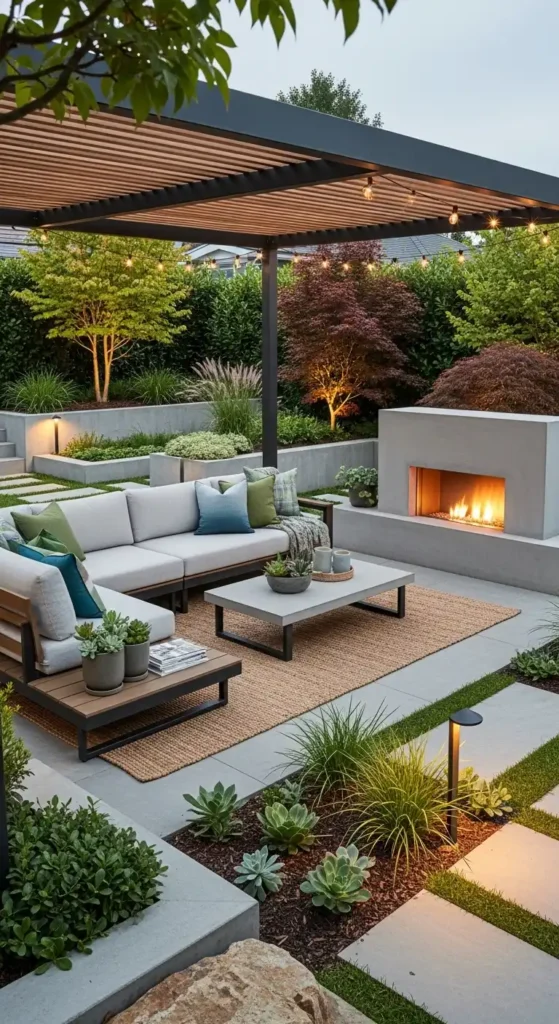
Adding outdoor rugs and cushions enhances the “Cozy” factor significantly. This extension increases the perceived square footage of your property. It creates a seamless transition between indoor and outdoor environments.
8. Opt for Sustainable and Low-Maintenance Plants
Sustainable plants save significant amounts of water and labor costs. Choosing native species ensures your garden thrives in the local climate. These plants are naturally resistant to common pests and diseases.
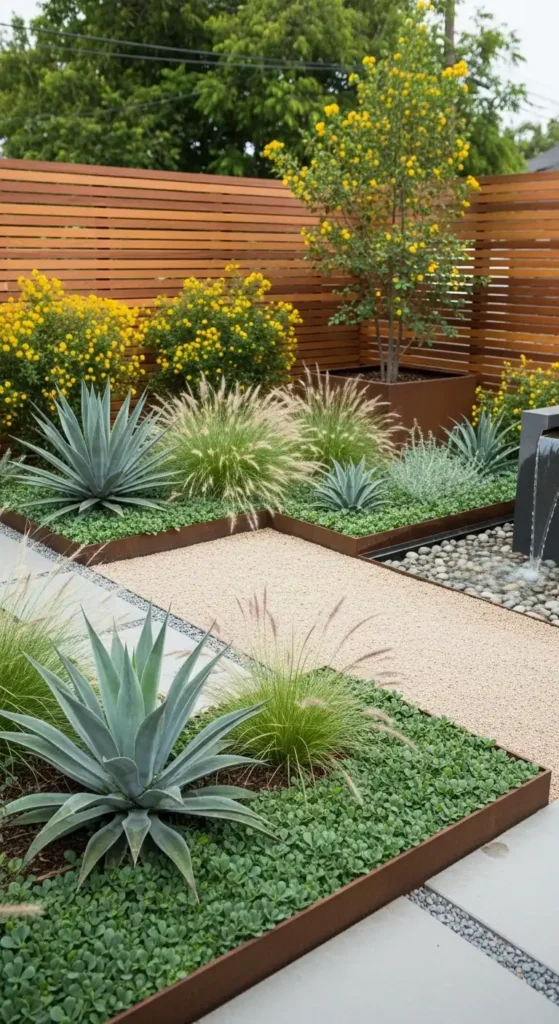
Low-maintenance greenery is ideal for busy homeowners and professionals. These selections stay vibrant without constant chemical or manual intervention. Sustainable gardening is a top-tier trend for eco-conscious branding.
9. Embrace Clean Lines and Geometric Shapes
Clean lines and geometric shapes form the core of modern design. These elements provide a structured framework that looks neat and organized. They effectively eliminate visual clutter from the outdoor environment.
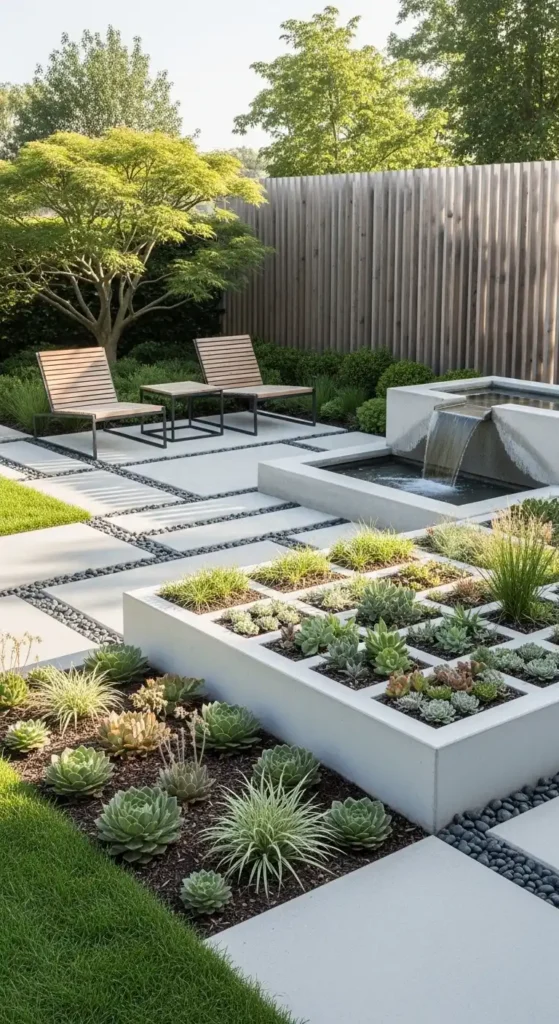
Sharp edges and defined grids guide the viewer’s eye naturally. Geometric patterns align perfectly with contemporary home architectures. This minimalist approach makes even small spaces feel expansive.
10. Incorporate Vertical Gardens or Green Walls
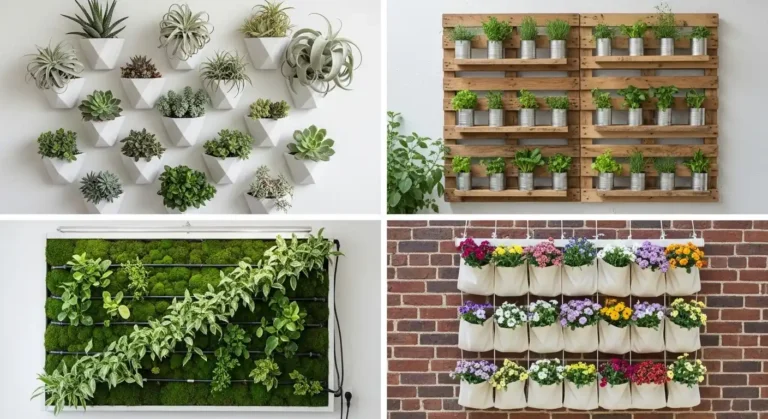
Vertical gardens are the ultimate “Space-Saving” solution for urban areas. Covering walls in lush greenery provides an instant forest-like atmosphere. They turn boring boundary walls into vibrant, living masterpieces.
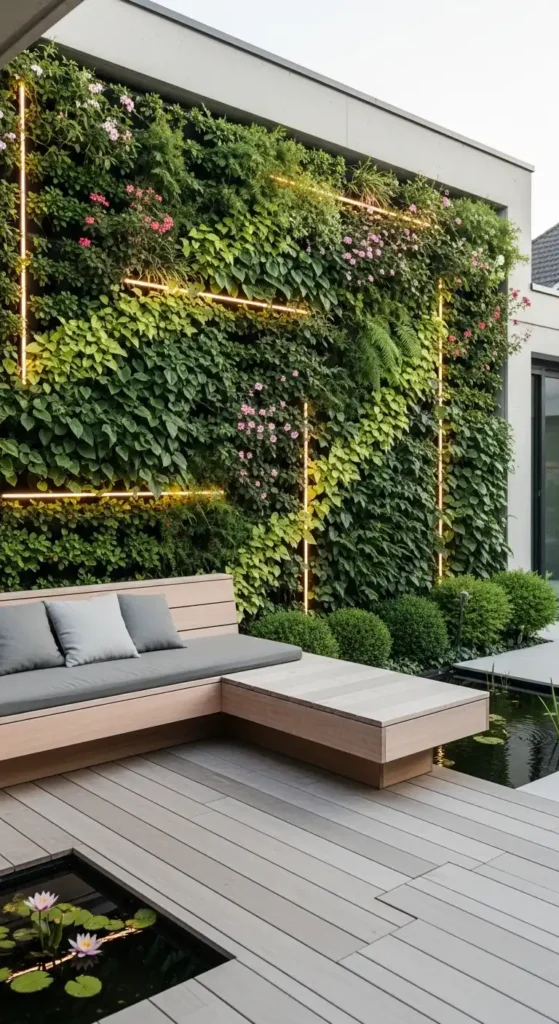
Green walls help regulate temperature and improve local air quality. They provide high visual density without taking up precious floor space. This is a premium choice for modern balcony or patio designs.
11. Integrate Smart Garden Technology
Smart technology makes garden management efficient and data-driven. Automated irrigation and smart lights can be controlled via smartphone. This reduces resource waste while keeping plants perfectly healthy.
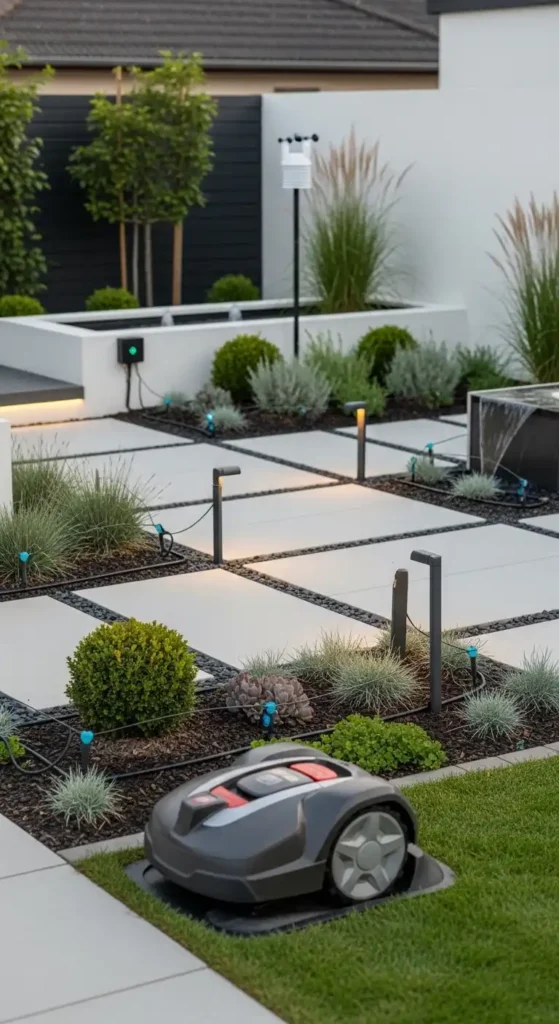
Soil sensors provide real-time updates on moisture and nutrient levels. This tech-savvy approach appeals to the modern, time-poor professional. Smart gardens are always optimized for peak performance and beauty.
12. Experiment with Bold Planters and Sculptures
I like using modern garden designs to add bold planters and sculptures that bring artistic personality to my space. Oversized pots or abstract shapes act as strong focal points and instantly elevate the look. They help my garden feel more like a professionally designed landscape than a standard backyard.
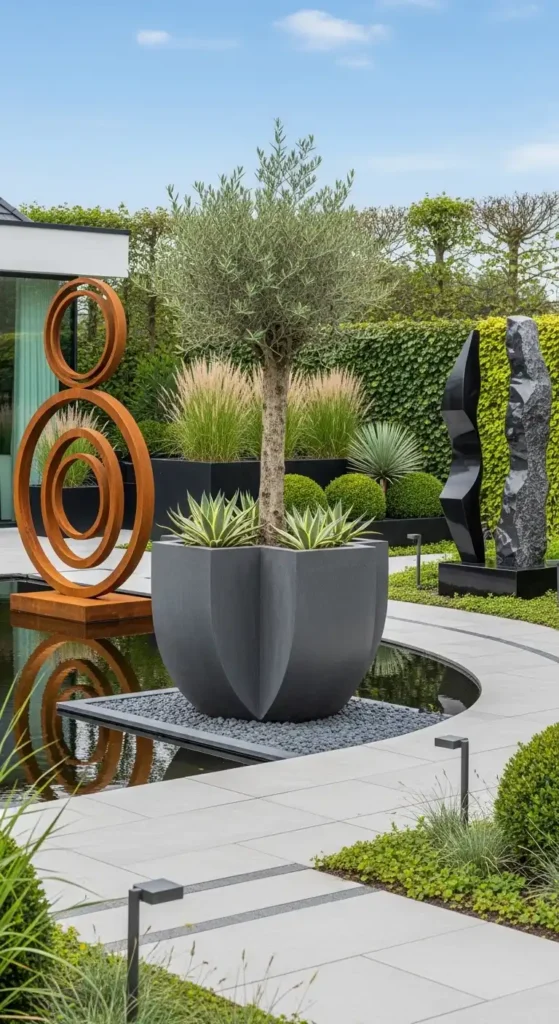
Sculptures should be placed strategically to improve the visual vista. Choosing the right material ensures the art matches the overall theme. These details add a “Curated Gallery” feel to the landscape.
13. Combine Hardscape and Softscape Seamlessly
The balance between hardscape and softscape is vital for harmony. Stone paths and lush greenery must integrate without harsh transitions. This creates a functional space that still feels soft and natural.
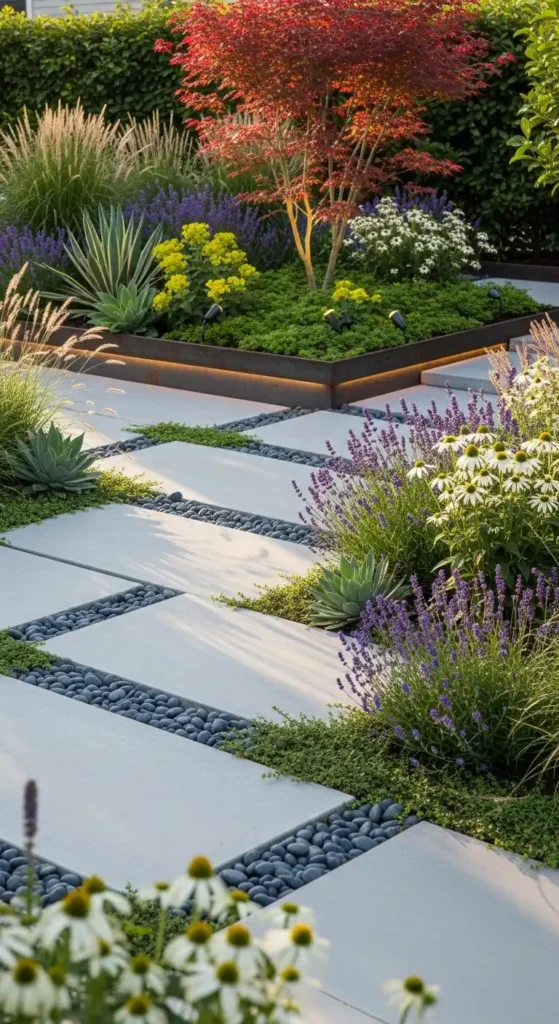
Too much hardscape feels cold, while too much softscape feels messy. A seamless blend ensures the garden is both usable and beautiful. This balance is the hallmark of professional landscape engineering.
14. Use Monochrome or Limited Color Palettes
Monochrome palettes represent the height of modern garden sophistication. Limiting colors reduces visual noise and fosters a peaceful environment. It allows the textures of the plants to take center stage.
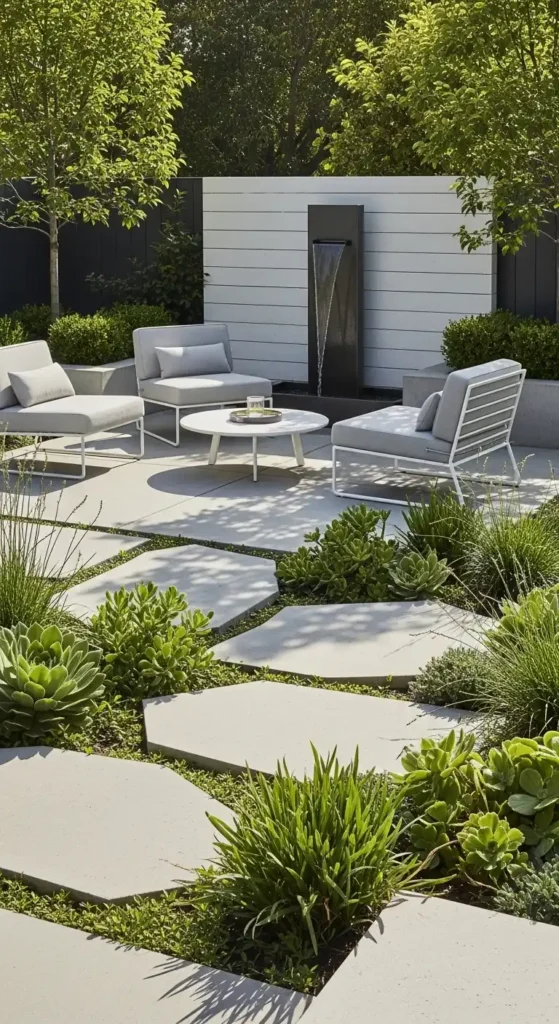
Neutral tones like charcoal and white make green foliage pop. This cohesive color scheme creates a very professional, unified look. It is a timeless strategy for high-end residential styling.
15. Integrate Outdoor Art and Mirrors
Outdoor mirrors create the illusion of a much larger garden area. They reflect natural light into dark corners, brightening the entire space. Art pieces add a creative touch that reflects the owner’s style.
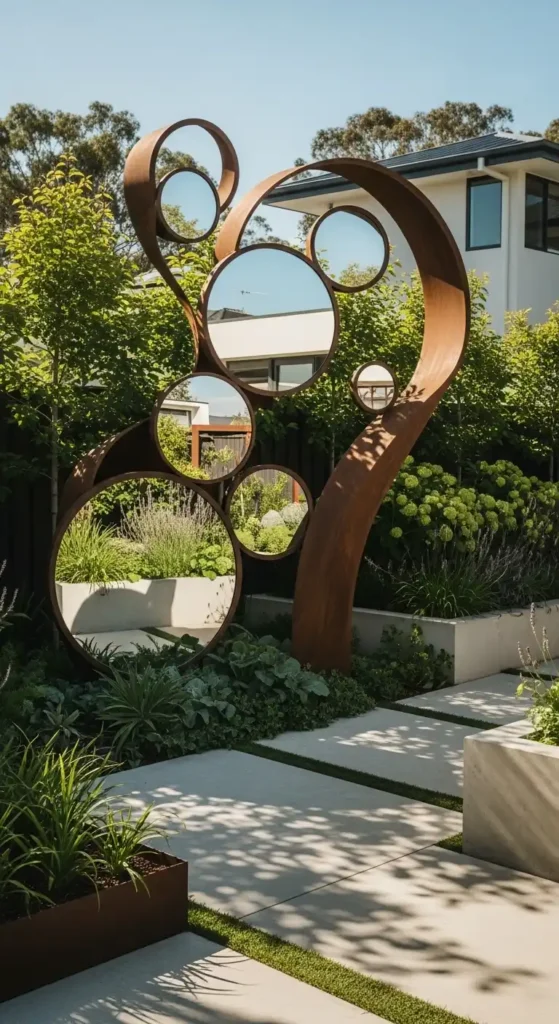
Art and mirrors serve as excellent conversation starters during gatherings. They add unexpected depth and dimension to flat garden walls. This innovative approach makes a small garden feel like a vast park.
16. Keep the Lawn Minimal or Replace It
Reducing lawn size is a major trend in sustainable modern design. Replacing grass with gravel or ground covers lowers maintenance costs. It creates a more “Edgy” and contemporary aesthetic for the home.
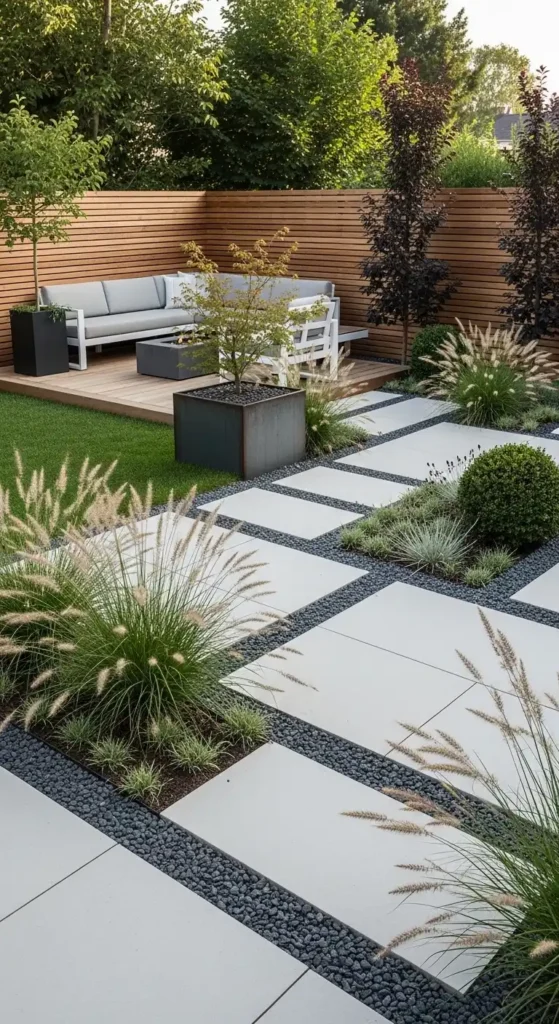
Minimal lawns allow for more functional zones like fire pits or decks. This change makes the garden more drought-resistant and eco-friendly. It’s a “Future-Proof” move for any modern property owner.
How You Can Maintain a Minimalist Garden Aesthetic?
The secret to maintaining a minimalist garden lies in “Smart Plant Selection,” so always opt for low-maintenance varieties like Ornamental Grasses or Succulents. Planting these in a symmetrical layout ensures the garden remains well-managed and tidy, even with a busy schedule.
Additionally, using decorative pebbles or mulch is an excellent way to suppress weeds and retain soil moisture effectively. This strategy significantly reduces maintenance time and serves as a perfect gardening solution for modern, fast-paced lifestyles.
Which Sustainable Materials Work Best for Modern Gardens?
Sustainability is no longer just an option but a necessity, leading to a massive trend in using recycled materials and composite decking in modern gardens. These materials are not only eco-friendly but also highly durable against harsh weather conditions, keeping your garden looking new.
Using local stone and permeable paving improves drainage by allowing rainwater to absorb directly into the ground. This approach prevents waterlogging issues and helps your garden maintain an ecological balance while conserving water resources.
What are the Common Challenges in Modern Garden Design?
The biggest challenge is space optimization, especially in urban areas where creating a minimalist look in small spaces can be difficult. The best solution is utilizing vertical gardening and custom-built furniture to ensure the garden looks open and airy rather than cluttered.
Another challenge is balancing the budget with the local climate to ensure plants remain healthy year-round. Always choose plants and materials suited to your specific region to minimize long-term maintenance costs and keep the garden’s vibrancy intact.
Conclusion
Modern garden design is not just a style; it is a lifestyle choice that combines functionality with tranquility while increasing your property’s value. These 15 designs aim to showcase the perfect balance of minimalism, allowing you to achieve a premium outdoor retreat with minimal effort.
Always choose elements that align with your specific climate and space to ensure your garden remains trendy for years to come. With the right materials and smart lighting, you can successfully transform a basic backyard into a serene and stylish sanctuary.